 Video Diary
Journaling is one of the best-documented self-care habits there is: research on expressive writing links it to lower stress, better emotional processing, and sharper self-awareness. But most people who try a written journal quietly abandon it by February. Video journaling keeps the benefits — and fixes the part that makes people quit.
1. Video captures what writing can't
A page holds your words. A video holds your voice cracking a little, your tired eyes, the rain on the window behind you, your dog wandering into frame. These details vanish from memory within weeks — but video keeps them. Rewatching an entry from a year ago isn't like reading about a day; it's like visiting it.
2. It's faster, so you actually do it
Writing a decent journal entry takes fifteen minutes. Recording one takes ninety seconds. When the cost of the habit drops that much, consistency stops being a discipline problem. Most video journalers record more days per month than they ever managed with a notebook.
3. Talking is thinking
There's a reason "thinking out loud" is a phrase. Speaking forces you to turn a vague feeling into an actual sentence, which is most of what makes journaling therapeutic in the first place. The camera is a patient listener that never interrupts.
4. You literally see yourself change
This one is unique to video: watching yourself from six months ago, you notice things no written record shows — you're calmer now, or you smile more, or that thing you were terrified about turned out fine. It builds a kind of self-compassion that's hard to get any other way.
5. Emotional processing, out loud
Saying a worry to the camera gets it out of the loop in your head. Many people use their video diary the way others use a long walk or a phone call with a friend — a pressure valve at the end of the day. (We cover this in depth in video journaling for mental health.)
6. Mood patterns become visible
Pair each entry with a quick mood tag and your diary doubles as a mood tracker. Over weeks, patterns emerge: the job stress that peaks on Sundays, the lift you get from seeing friends. Awareness like that is the first step to changing anything.
7. It becomes a time capsule — automatically
The ordinary days are the ones you'll want back: the commute, the old apartment, the friend who moved away. A video diary preserves them without you trying. String your clips together and you have a film of your year — something no notebook can offer.
Video journaling vs written journaling
- Speed: video wins — 1–2 minutes vs 10–15 minutes per entry.
- Emotional detail: video wins — tone, face, and place are all preserved.
- Reflection while creating: tie — speaking and writing both force clarity.
- Privacy needs: video demands more care — choose an app that keeps entries on your device, with no AI processing. (See keeping a private video diary.)
Getting these benefits with Video Diary
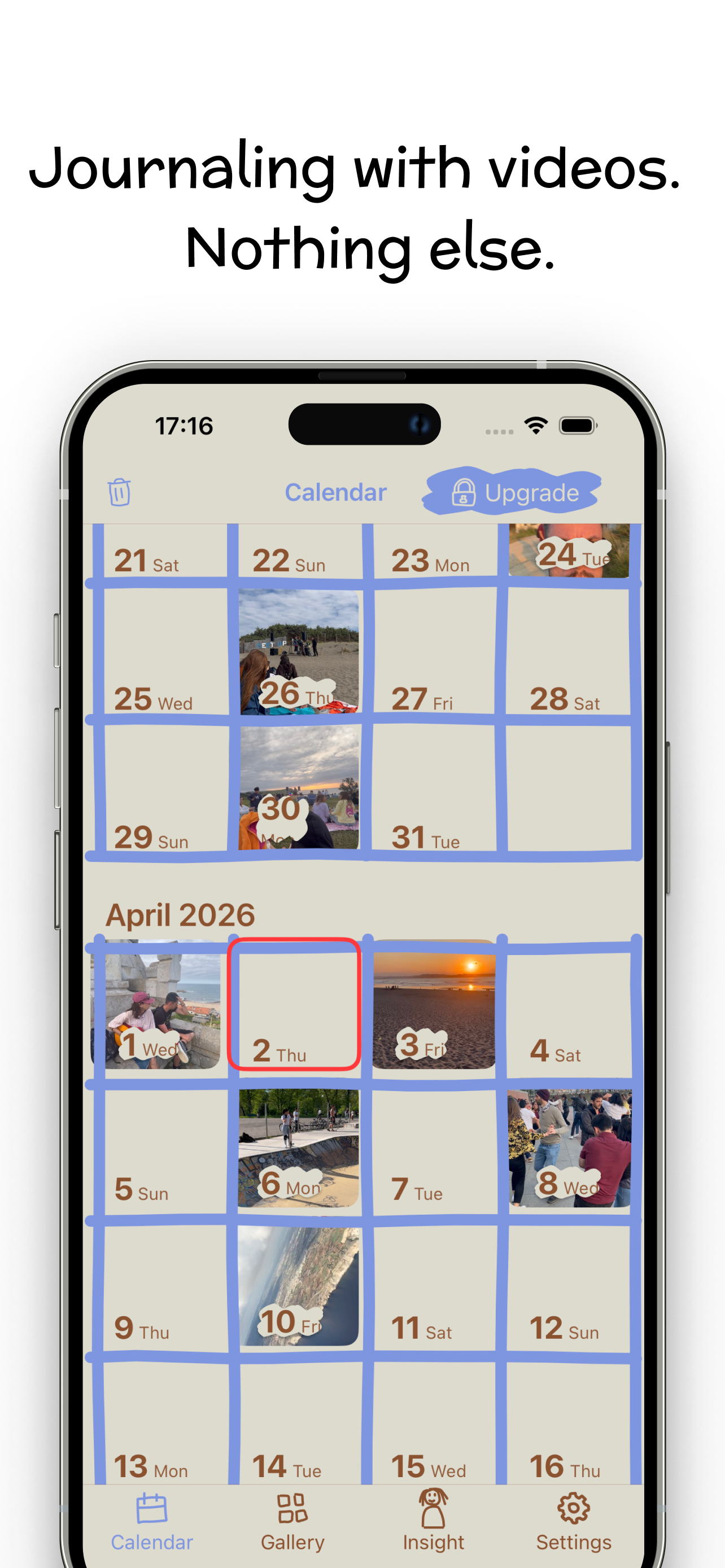
Video Diary is a journaling app designed around the benefits above — and nothing else:
- One-tap recording keeps the habit cost near zero (benefit #2).
- Daily prompts give your thinking-out-loud a starting point (#3).
- Mood tracking with an Insight view makes your patterns visible (#6).
- The montage maker turns your entries into a movie of your year (#7).
- No AI, no feed, no sharing: your diary stays a diary (#4, #5 — honesty needs privacy).
Get Video Diary free on the App Store and give the habit two weeks — that's usually all it takes.